
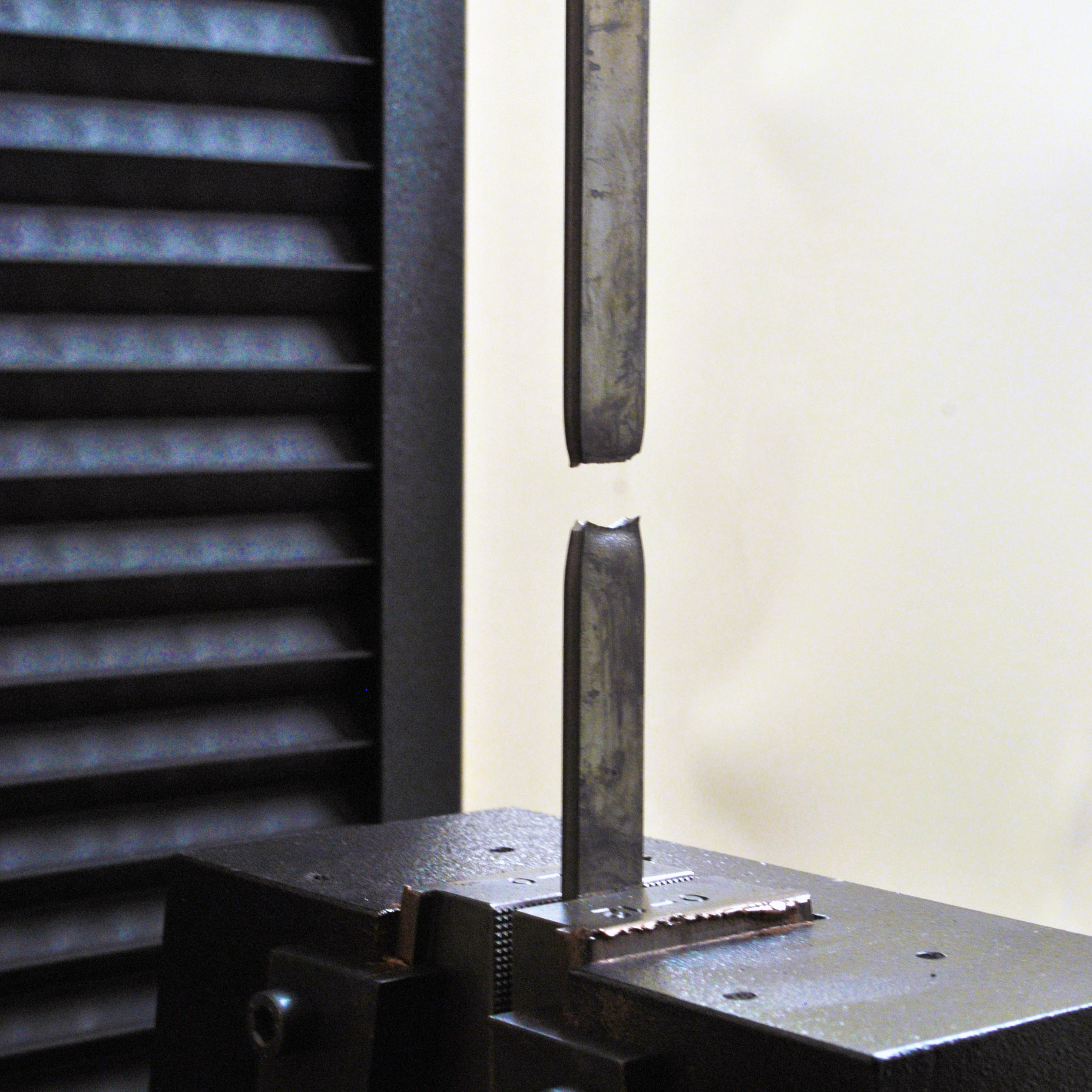
Tensile testing machine
In-house mechanical tests to verify the material’s behavior and compliance with the required properties.
Dimensional and documentary checks are carried out on incoming material to verify compliance with the required technical specifications.
Quotations and order confirmations are managed in written form and accompanied by a detailed technical sheet.
The computerized order management system, integrated with the machine park, allows precise control of the entire production cycle.
In-line laser measurement, continuous dimensional checks and manual controls with precision instruments.
Visual inspection, verification of surface, edges and straightness on every coil at the end of the production process.
In-house mechanical tests and complete batch traceability throughout all stages of production.
Below are the main checks and instruments used in our quality process.
In-house mechanical tests to verify the material’s behavior and compliance with the required properties.
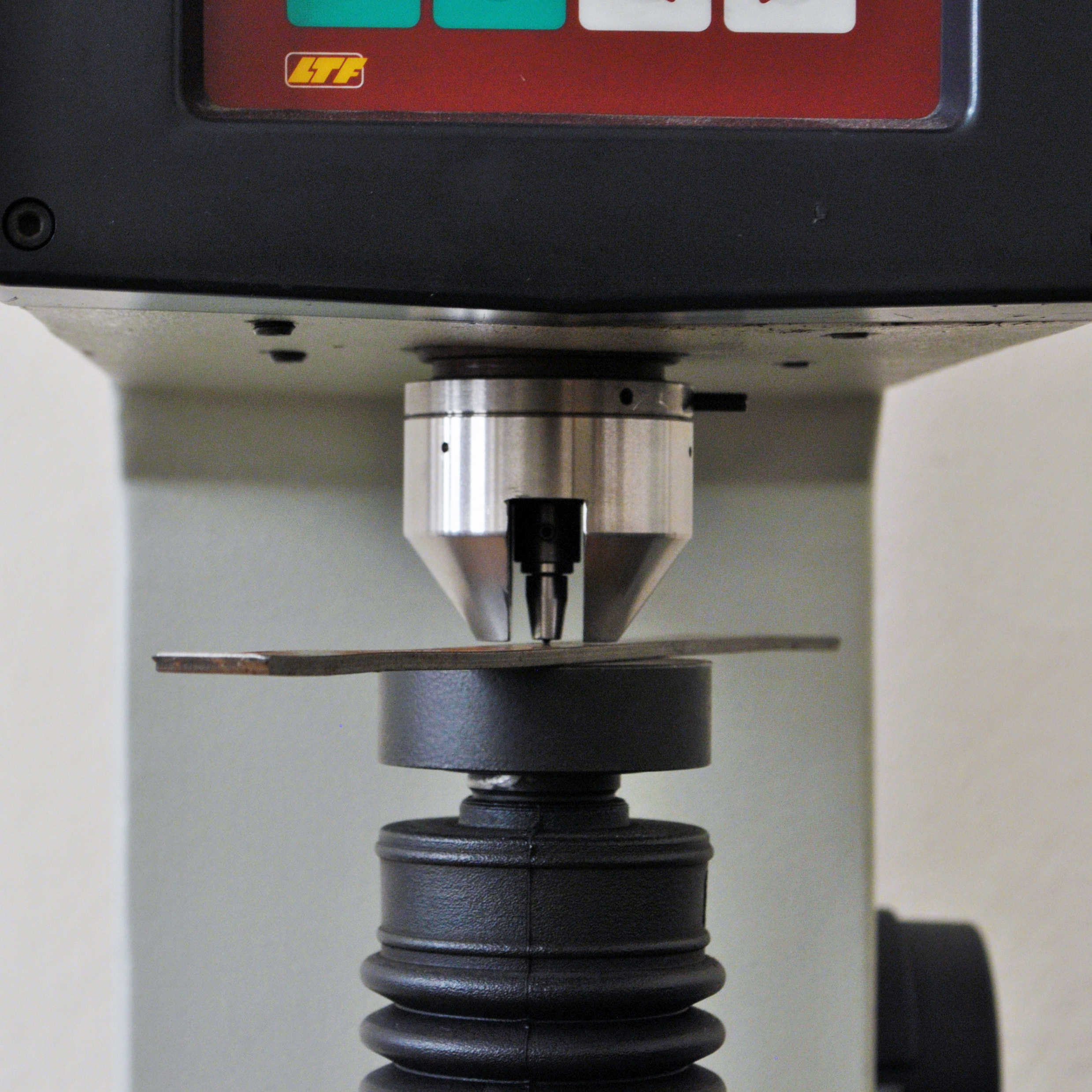
Hardness tests carried out in the laboratory to support the qualitative and functional verification of the product.
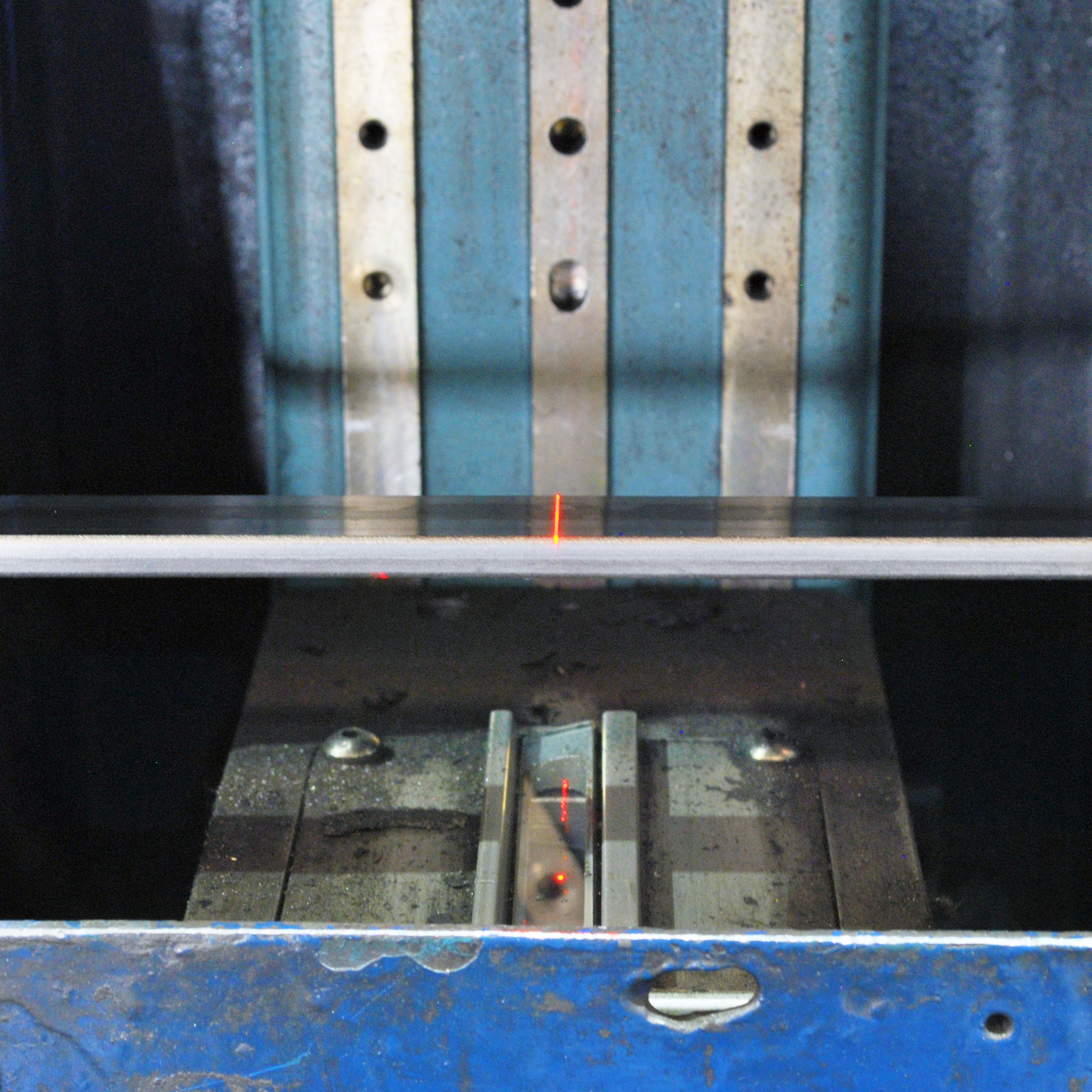
Continuous dimensional monitoring directly in production, integrated with the rolling mills for constant process control.
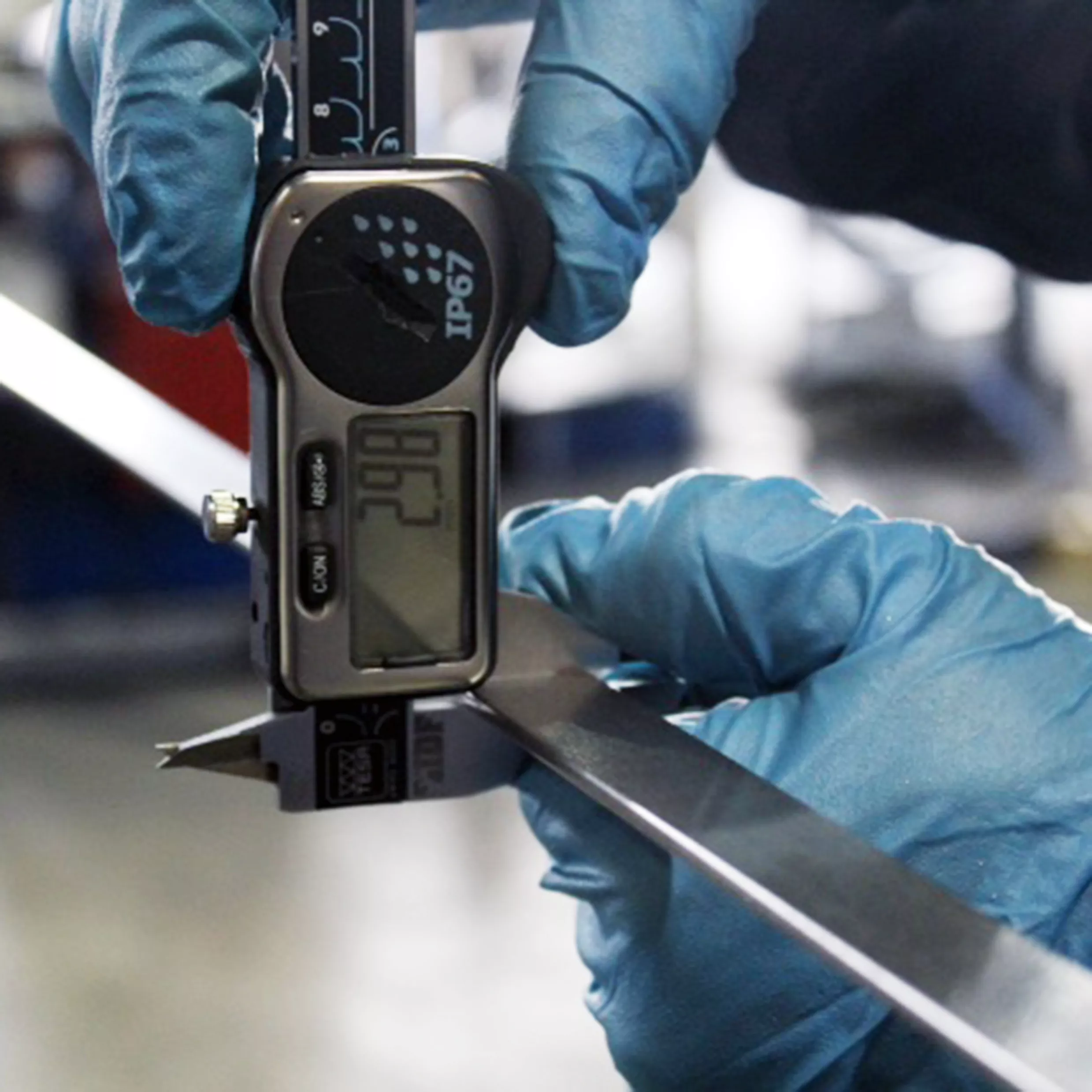
Final verification of surface, edges, straightness and dimensions with the aid of calipers, micrometers and dedicated visual checks.
At the customer’s request, we are able to provide various types of product certifications and declarations, in compliance with current regulations and final application requirements.
Cold rolling is a plastic deformation process carried out at room temperature, therefore below the recrystallization temperature of the metal. During processing, the material is compressed between rotating rolls that reduce its thickness and permanently modify its shape.
Yes. Compared to drawn product, cold-rolled product has less porous surfaces, often better suited to high-quality surface treatments. The production process is also more flexible, because it allows product dimensions to be changed by adjusting the rolling mill, without the need for dedicated tooling for each size. Drawn product guarantees tighter dimensional tolerances, but cold-rolled product is often more competitive in terms of flexibility and cost, especially for small sections under 200 mm².
In many cases, yes. Rerolled and edged strips are a valid alternative to slit strip when material continuity and edge quality are essential aspects. In fact, slit strip may have irregular edges and sharp corners, which affect both the aesthetic-functional quality of the product and the safety and performance of surface treatments.
Cold rolling is carried out at room temperature and makes it possible to achieve greater dimensional precision and a smoother, more uniform finish. Hot rolling, on the other hand, takes place at high temperatures above 1000°C and is generally better suited when material workability is prioritized over final precision and surface quality.
Cold rolling is particularly suitable when good precision, better surface finish, greater production continuity and a cost-effective solution are required. For this reason it is often chosen as an effective alternative both to drawn product and, in certain cases, to traditional slit strip.
For requests related to certifications, technical documentation, mechanical tests or specific control requirements, our quality department is available to provide dedicated support.